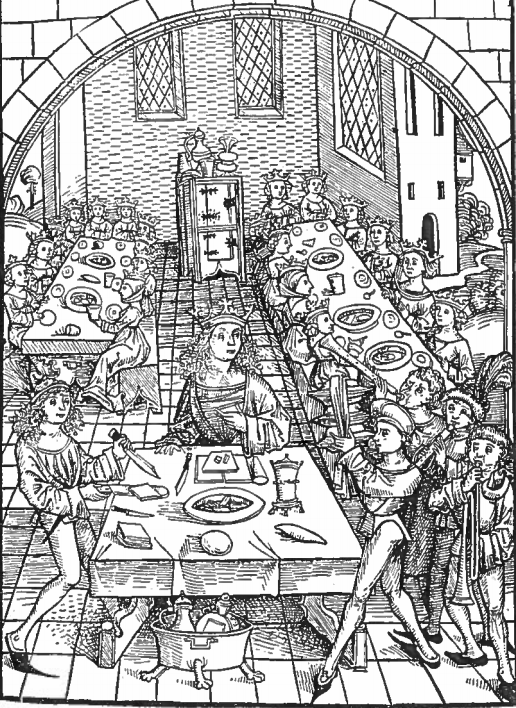
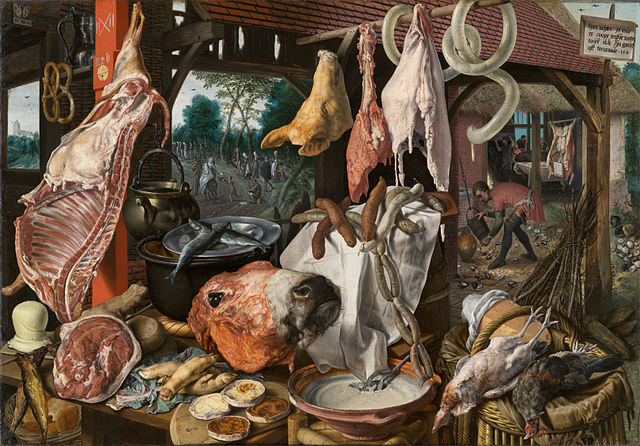
During the middle ages food culture changed drastically. In Ancient Rome cuisine was focused around bread, wine, and oil. However, during the middle ages it was centered primarily around meat.
Meat became the primary food both through consumption and psychological means. According to Massimo Monanari’s Medieval Tastes, it was thought in Ancient Rome that bead was the perfect food and provided all the nutrients you would need. This became the same ideology for meat, specifically with pigs, for that was the ideal meat. Although meat eating was common throughout all classes, the amount of meat consumption varied. It was more common for peasants to consume less meat than nobility, and meat increasingly became a symbol of the nobility. During the middle ages bread and wine were still important, they became a religious symbol for Christianity.
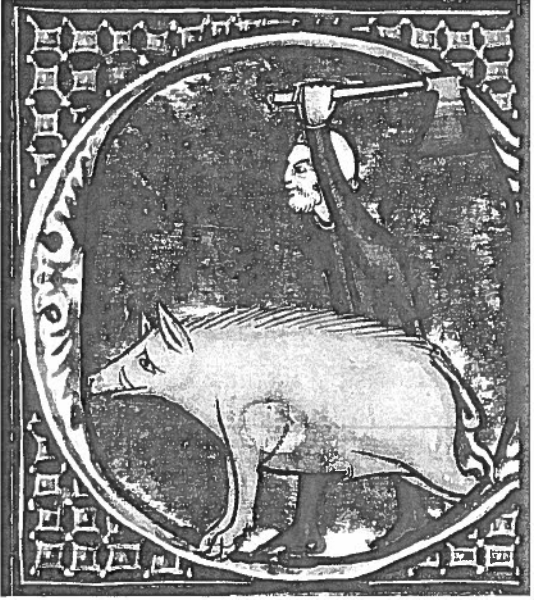
Meat also had a religious connection, there was a strong link between diet and virtue during the medieval period. In Woolgar’s Food: The History of Taste he explains how fasting was very common during this time period. Unlike the modern era where most people fast during religious holidays, fasting in the middle ages was very common, and people would abstain from meat consumption multiple times during the week. In Christianity meat, dairy, and fat consumption was considered gluttony and lechery, so people would fast for the salvation of their soul. Meat eating days were usually Sunday, Tuesday, and Thursday, and sometimes fish replaced meat.
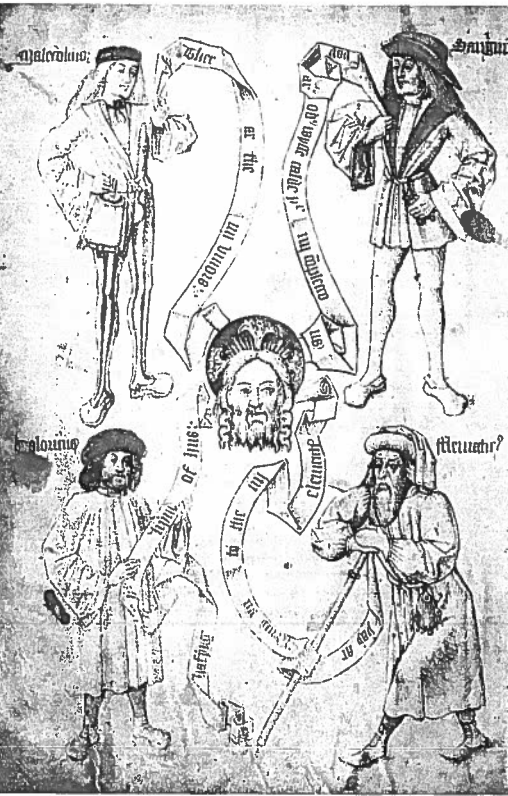
Another important factor in the medieval diet is the humoral theory. This theory does not originate from the middle ages, but it gained popularity. They wanted to match their diet to fit the four elements and colors. Fire is hot/dry, water is cold/wet, earth is cold/dry, and air is hot/wet. Yellow bile relates to fire, blood relates to air, phlegm to water, and black bile to earth. It was important to keep these elements in balance when preparing and eating food, which is why meat was often boiled. Digestion was considered a type of cooking, and all forms of cooking changed the nature of food, so it was important during preparation to keep the proper form of nature and not cause an imbalance. People were very concerned about causing an imbalance that some (nobility) would have physicians sit behind them at meals and instruct them on what to eat.
During the middle ages there were eight flavors instead of the five we know today; sweet, salty, bitter, salty, and umami. The eight flavors were; sweet, greasy, bitter, salty, sharp, harsh, salty like the sea, and vinegary. These flavors combined with the humoral theory shaped the culinary world of the middle ages.
Other food beside meat was also important during this time period. Cereals (grains) also became an important factor in the medieval diet, as well as the appearance spices specifically sugar. These spices were used to change the nature of the dish, but not cause an imbalance.
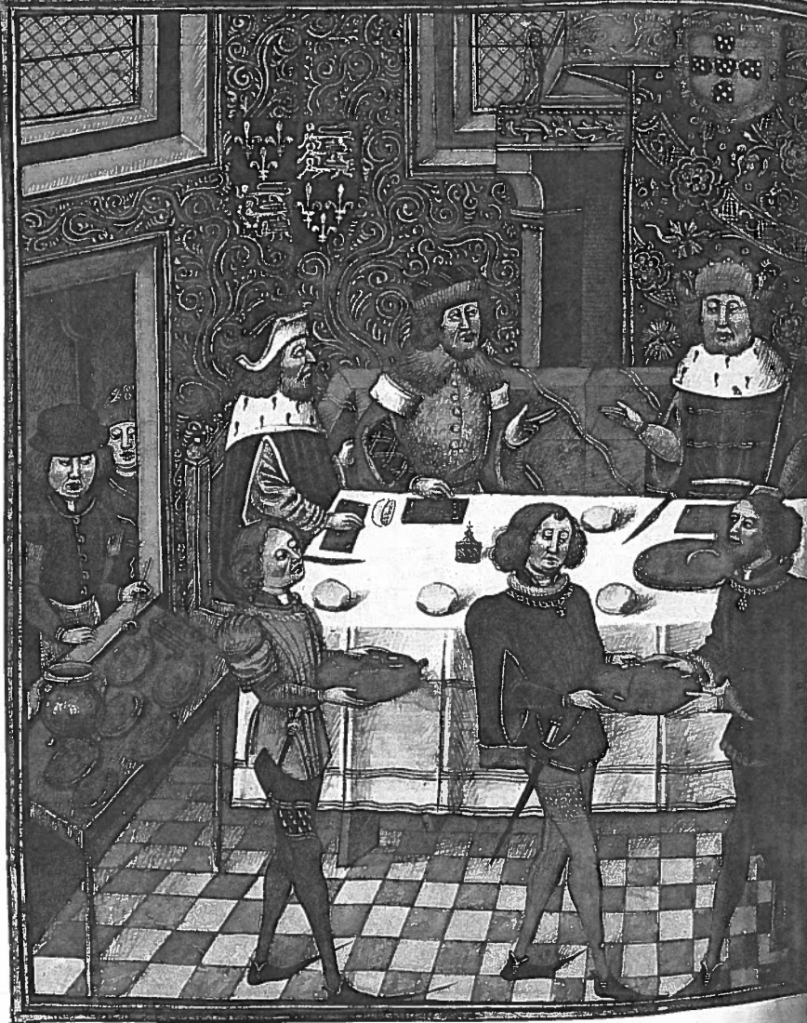
Because of the emphasis of the humoral theory in the medieval diet health was important to them. Their diet centered around balance and meat, which they thought was the ideal food. If I were not a pescatarian I would probably try the medieval diet. I think it would be interesting to have multiple meat courses and center all my food around balance. I think that would be an interesting experiment for anyone to try and see if following the humoral theory has health benefits.
 Francesca's travels